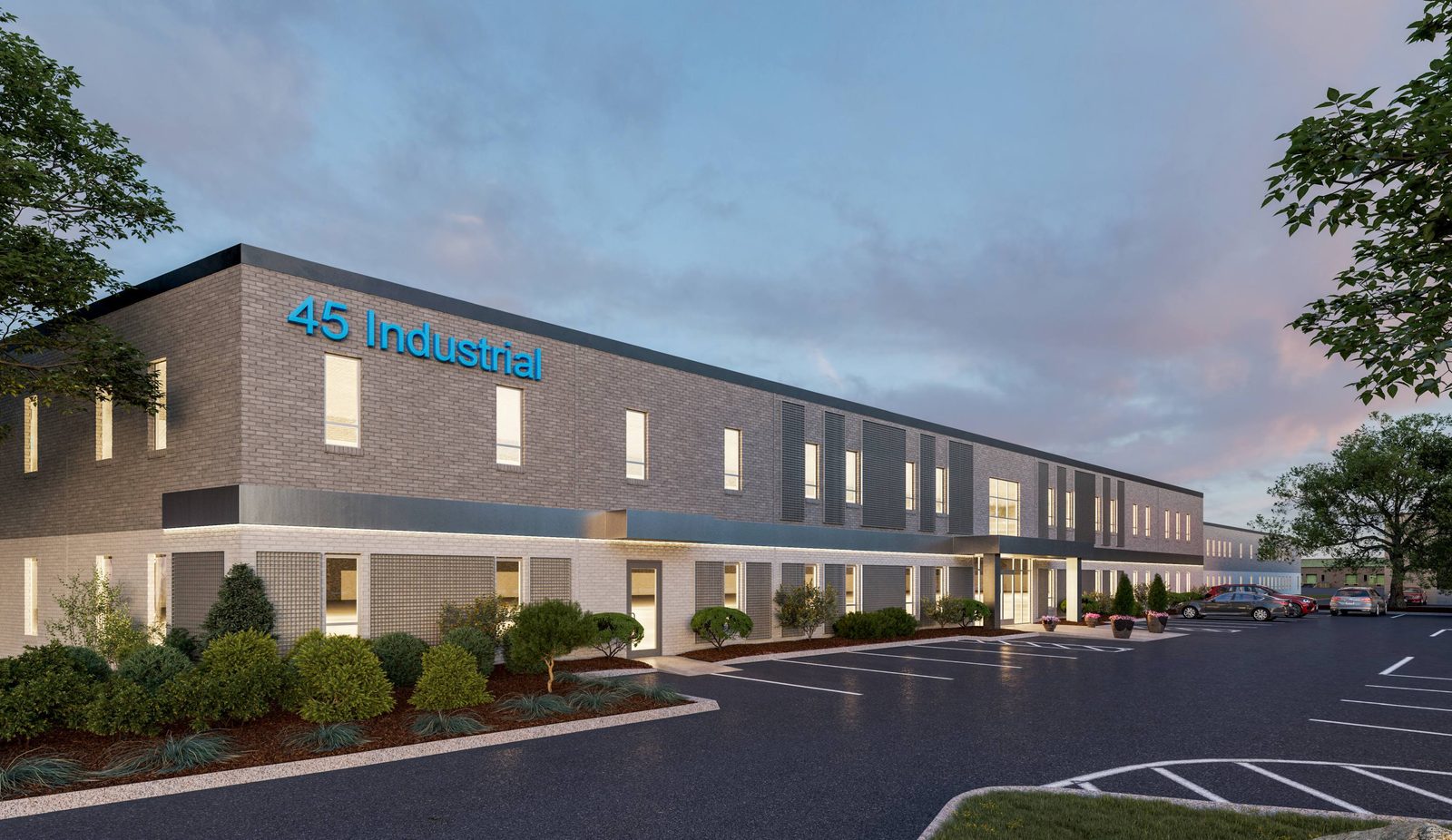
Image: Camber Development leasing materials
Another MIT-born company is trading Kendall Square for Woburn. Foundation Alloy—a materials startup that produces high-performance metal alloys without melting them—is relocating its headquarters from The Engine, MIT's “tough tech” incubator in Cambridge, to 45 Industrial Parkway here in Woburn.
If that address sounds familiar, it should. In December, VEIR—another Engine-backed company, building superconducting power lines—signed a long-term lease for 53,000 square feet in the same building. Foundation Alloy takes the balance. One unassuming 89,000-square-foot flex building near the 93/95 interchange now houses two of Greater Boston's most closely watched advanced-manufacturing startups.
This is not a coincidence. It's a pattern, and it's worth understanding whether you own commercial property here or simply care where Woburn is headed.
Why they come
Foundation Alloy just raised a $22 million Series A to scale from pilot batches to multi-ton production. You cannot do that in a Cambridge lab tower. Companies at this stage need three things that are nearly impossible to find inside the core and abundant here:
- Power. 45 Industrial Parkway carries 7,000 amps across two electrical services—the kind of capacity a metals company or a superconductor testbed actually draws. Buildings with real power and industrial zoning are, as the landlord's own broker put it, an increasingly rare combination in this market.
- Zoning that says yes. The building sits in Woburn's Industrial Park district, where manufacturing is a permitted use—not a variance fight.
- Proximity without the price. Twenty-five minutes from Kendall Square at a fraction of the rent, at the junction of I-93 and I-95, with Anderson commuter rail nearby for the team that reverse-commutes.
Why it matters for property owners
The buyers of this story are institutional. Camber Development and Wheelock Street Capital bought 45 Industrial Parkway in 2022 for $23.8 million—about $266 a foot for a 1979 building—then invested in upgrades and filled it with venture-backed manufacturers on long-term leases. They're still investing: the owner was before the City Council this spring for permission to expand the loading doors.
That math should recalibrate how every owner of older industrial property in Woburn thinks about value. The dated flex building with heavy power that looked like a candidate for teardown five years ago is now the scarcest product in the market. Lab conversions get the headlines; power-rich manufacturing space gets the leases.
Why it matters for everyone else
Woburn's split tax rate leans on commercial and industrial owners so homeowners pay less. Every VEIR and Foundation Alloy that moves in strengthens that base—and these tenants bring engineering payrolls, not just forklifts. The city's industrial parks quietly did what a decade of economic-development plans promise: they caught the manufacturing wave rolling out of Cambridge.
I've watched Woburn's industrial corridors evolve for twenty years, and this is the strongest demand story they've ever had. If you own industrial or flex property anywhere in the city—especially anything with three-phase power, clear height, or extra land—it's worth knowing what the tough-tech wave means for your specific building before a broker from downtown tells you a convenient version of it.
Welcome to Woburn, Foundation Alloy. Smart move.
—Mark Kiklis, Kiklis Real Estate. Born in Woburn, selling and analyzing its real estate for 20+ years. Call or text 781-933-2500.